
The Abandonment of Departure
Death in VeniceThis flow follows the repeated opportunities to leave that Aschenbach turns into reasons to remain near Tadzio.
increasing Bearing strength in each event
 decreasing
Bearing strength in each eventdecreasingThe First Farewell
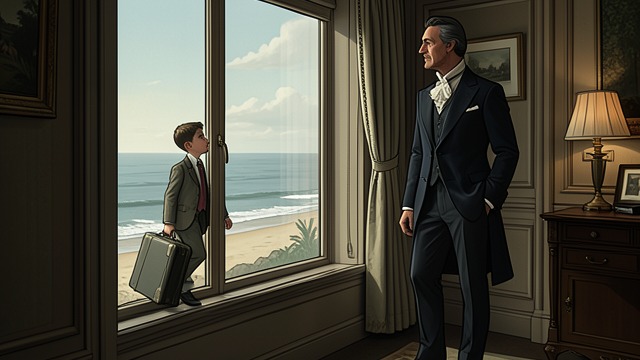
The First Farewell
A decision made too quickly
Aschenbach announces his departure after Venice’s heat unsettles him. The next morning, fresher air makes him question whether he has acted rashly.
A farewell with feeling
He sees Tadzio before leaving and silently wishes him well. The moment gives the departure emotional weight, though Aschenbach has not yet admitted how much the boy affects his choices.
The Misrouted Trunk
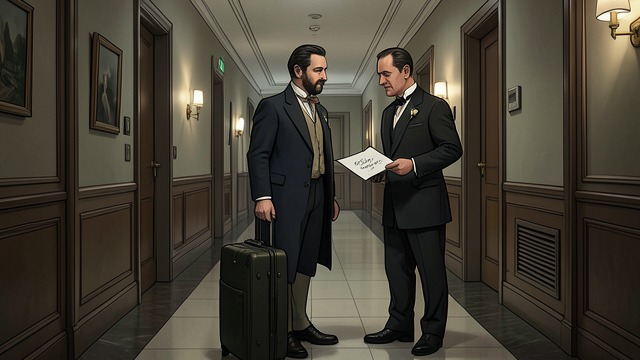
The Misrouted Trunk
An accidental obstacle
Aschenbach learns that his large trunk has been sent to Como instead of following him. He declines to travel without it and arranges to return to the beach hotel.
The excuse welcomed
The mistake gives him a respectable reason to reverse course. His delight at being turned back reveals that circumstance is serving a desire he has not openly acknowledged.
The Real Reason
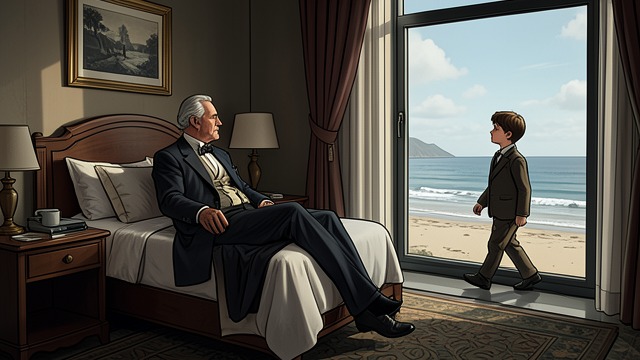
The Real Reason
Recognition from a distance
From his room, Aschenbach spots Tadzio returning from the beach. A casual greeting dies before he can form it, replaced by recognition of the truth.
Desire admitted
He understands that Tadzio made leaving difficult. The return is no longer merely a logistical delay; it is the first clear sign that his itinerary has become subordinate to watching the boy.
A Stay Without Limit
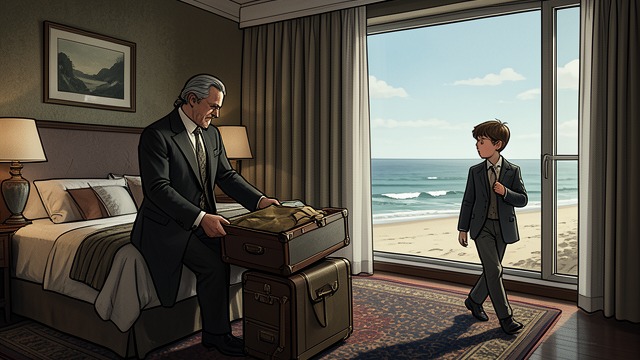
A Stay Without Limit
Holiday becomes residence
Aschenbach unpacks and settles into the hotel, treating the recovery of his belongings as no reason to depart. His daily comfort makes the decision feel easy.
A new routine
The beach and the city now offer regular chances to see Tadzio. What began as a short restorative break becomes an open-ended attachment to a place and a person.
The Final Chance Refused
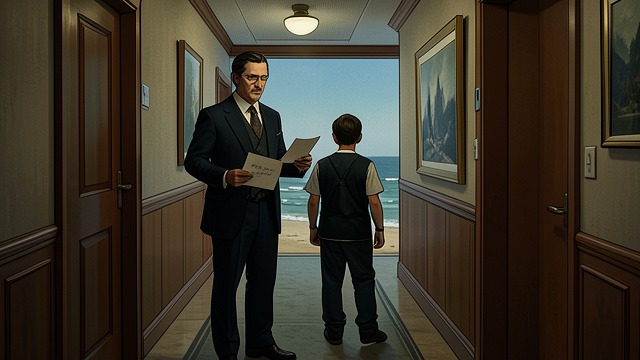
The Final Chance Refused
A clear warning
An English clerk explains that cholera is spreading and advises Aschenbach to leave immediately. Aschenbach now has reliable knowledge as well as an obvious reason to escape.
Choice over safety
He considers warning Tadzio’s family but recoils from the prospect of losing the boy. He chooses silence and remains in the dangerous city, making desire an explicit priority over prudence.
The morning he prepares to leave the Lido
At the Venice station that morning
At noon after his return to the Lido
The days after the luggage returns
After the English clerk reveals the epidemic
